
Residential, commercial property assessments take slight rise in 2025: PVSC
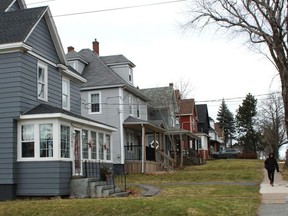
New Property Valuation Services Corp. figures show overall assessments will see a 9.76 per cent increase, but some commercial assessments will see a decrease
Article content
For the third consecutive year, Nova Scotia residential and commercial property owners will see another jump in their assessment values — but not by much, compared to previous assessment increases.
New figures released Monday from the Property Valuation Services Corp. (PVSC) show that residential and business property assessments across the province will see an overall 9.76 increase.
Advertisement 2
Article content
Broken down into dollar figures, PVSC’s 2025 assessment roll shows that overall residential assessment values climbed to $160.36 billion, an 11.8 per cent rise compared to 2024’s $144.24 billion, while residential assessments that include the provincial government’s Capped Assessment Program (CAP) values rose to $116.84 billion, a 7.17 per cent increase from the previous year’s $109.02 billion.
Driven by market growth
Jeff Caddell, PVSC’s director of valuation standards, said during a virtual media briefing that market growth continues to predict residential and commercial property assessment values.
“When we think back following (the COVID pandemic), we saw a significant market growth throughout 2021 and 2022, before we saw a bit of a slowdown in the second half of 2022 that continued into the early months of 2023,” Caddell said.
“But the market rebounded during 2023, which led us to the market value assessments on the 2025 notices.”
Those notices have been mailed out Monday and should be arriving within the next days, PVSC said in a separate news release.
Advertisement 3
Article content
Cape Breton Regional Municipality council was scheduled on Tuesday morning to hear more about the PVSC findings during a committee of the whole meeting at city hall in Sydney. In the CBRM, overall assessments increased to $10.7 billion from 2024’s $9,62 billion, a 11.2 per cent rise.
In other parts of Cape Breton, overall assessments rose:
- $167.5 million, or about 7.1 per cent, in Inverness County — compared to $446 million, or 24 per cent in 2024
- $145.8 million, or around 9.9 per cent, in Victoria County — compared to $249 million, or 20 per cent in 2024
- $123.7 million, or close to 8.4 per cent, in Richmond County — compared to $223 million, or 18 per cent in 2024
- And $31.8 million, or approximately 8.4 per cent, in the Town of Port Hawkesbury — compared to $55.7 million, or 17 per cent, in 2024
‘More moderate increases’
While the 2025 notices will show an overall increase, the 9.76 per cent rise isn’t as sharp compared to the last two assessment notices.
Around this time last year, the independent, non-profit authority responsible for assessing all properties in Nova Scotia reported overall assessments jumping up 17.72 per cent, while a 2023 report noted an 18.32 per cent spike.
Advertisement 4
Article content
“We’re seeing the market perhaps return to a more moderate increases from where we’ve been,” Caddell said.
“it’s really a reflection of what’s been happening in the market during 2023. We analyze the sales; we understand (what’s happening) within the different market areas across the province. We’re still seeing a low supply of properties on the market during 2023, (but) the demand was still quite high.
“And we think about interest rates as well … during 2023, so a lot of factors go into it. It’s really our role to study that, analyze it and report back.”
Lower commercial property values
As far as commercial assessments go, the total overall value across the province rose to $30.2 billion, a 2.79 per cent increase from 2024’s $29.4 billion, or a 9.32 per cent jump.
With the exception of the CBRM, Victoria County, the Halifax Regional Municipality and a few other mainland municipalities, many Nova Scotia communities reflected in PVSC’s 2025 assessment roll will see decreases in commercial property assessments.
In Cape Breton, for instance, the Town of Port Hawkesbury had its overall commercial properties for 2025 assessed at $155.5 million, a 1.1 per cent decrease from 2024’s $157.2 million. Richmond County’s commercial assessment fell from $302.42 million (2024) to $294.29 million, a drop of 2.7 per cent. And Inverness County’s commercial assessment values dropped ever so slightly from $275,532 in 2024 to $275,310.
Advertisement 5
Article content
Only Victoria County’s commercial assessment dollar figures rose from $288.2 million (2024) to $322.6 million (2025), a rise of 11.9 per cent.

“When we think about industrial-type properties outside the urban areas in the province and the more rural areas, it’s really coming down to the costs of construction,” Caddell said. “There are so many of those properties that are valued on the cost approach.
“And with the reduction in construction costs associated with those properties, that’s impacting the assessments on those commercial properties outside of the urban areas.”
Caddell explained that construction, lumber and labour-related costs soared throughout the pandemic, but “we’re seeing those costs come back down for 2024,” he said, adding that much of what influences their assessments comes from a hired commercial costing service to determine those values.
Reduced CAP rate
Another significant change for the 2025 assessment role is the percentage value of the CAP. As PVSC explained, the CAP rate determines how an eligible property’s taxable assessed value will increase each year. The taxable assessed value is what a municipality will use to determine property taxes.
Advertisement 6
Article content
This year’s CAP rate, as determined by the Nova Scotia Consumer Price Index, has been set at 1.5 per cent which means property owners will see less of an increase in their taxable assessed value than last year (3.2 per cent), PVSC said.
And as with past assessments, PVSC said it does not have the legislative authority to create property tax policy, set property tax rates, collect property taxes, or provide property tax relief.
“Those important roles are fulfilled by Nova Scotia’s provincial and municipal government,” the corporation noted.
As in past years, appeals can be made if residents or commercial property owners don’t agree with the PVSC assessment figures. Such appeals must be received by midnight on Feb. 13. Signed appeal forms can be submitted by email, mail or fax.
More information is available by visiting pvsc.ca.
Article content
link