Is Your Small Brand Tired Of Expensive Ads? Try Meme Marketing Instead

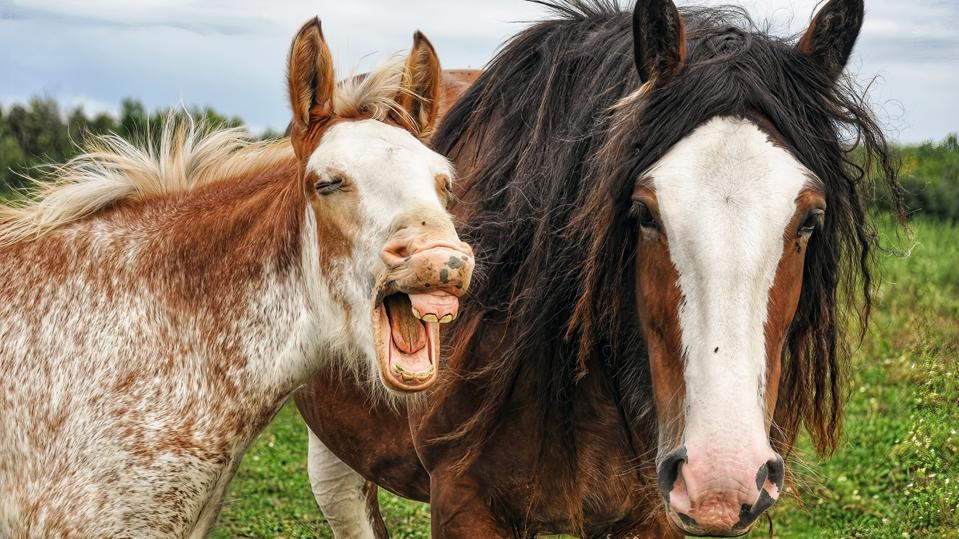
Using memes in your marketing can really move the needle for your small brand.
How’d you like to create a single meme that generates millions in value without spending a dime on ads? That’s what happened to Saratoga Spring Water, and it wasn’t even responsible for the meme. A few ago, a fitness influencer shared a video of his morning routine, which includes dunking his face into ice water that just happened to come from Saratoga’s distinctive glass bottles. Saratoga didn’t pay the guy; there wasn’t a partnership agreement. Yet that single video became meme marketing gold, creating $1.8 million in earned media value for Saratoga. Primo Brands, Saratoga’s parent company, saw its stock rise 16%. And Google searches maxed out at 100, the platform’s highest possible index, representing a 1,379% spike.
Unbelievable! One meme. Millions in value. Zero ad spend.
Welcome to 2025, where a well-timed meme can generate more value than a Super Bowl ad. And honestly? That’s good news when we’re stretching every marketing dollar, competing against brands with massive ad budgets, and trying to cut through this ridiculously dense digital noise.
But memes are jokes, right? They’re not professional. Surely you can’t use them for marketing.
Look, I get it. I used to think the same thing. But here’s what you’re missing: Memes can be way more than entertainment. When you approach meme marketing with actual strategy, an understanding of meme psychology, and a genuine desire to build community, you might discover that it’s one of the most cost-effective ways to build brand loyalty and drive growth you’ve ever seen.
Why meme marketing works better than paid ads
What are some of your favorite memes? Maybe you can use them as part of your meme marketing … More
Traditional advertising talks at customers. Memes invite them into an inside joke.
Duolingo is a great example. When people started creating memes about Duo the Owl’s aggressive reminder notifications (like “Your streak is in danger!” and “The owl is disappointed in you,”) the language learning app could have ignored it. Stayed buttoned up. Kept on being educational.
But the Duo team didn’t do that. They leaned into the joke, hard, turning Duo’s “menacing” persona into a character that defined the brand. Then they watched as the internet exploded. TikTok and YouTube started sending droves of new signups. Even today, Duolingo’s posts still beat other category influencers in its space.
Those results aren’t due to coincidence. They’re because of psychology.
Research backs it up. People who see a brand’s meme content feel way more connected to the brand than those who see typical brand promotional content. That’s because memes create what researchers call “shared understanding and identity.”
Meme marketing is a short cut to building that all important buyer trust.
Basically, memes are a psychological shortcut to trust. And we desperately need that shortcut. So much corporate messaging sounds completely hollow. No wonder brands using meme marketing see engagement rates as high as 60%, which is way more than the measly 5% you’d get with traditional marketing imagery.
Miguel Heinonen, who co-founded Whitefriar and studies the psychology behind memes, knows exactly why people (and brands) love them so much. “Memes work by using familiar visual patterns alongside emotional resonance,” he says. “When the audience sees a meme that reflects how they feel or what they experience, it creates a sense of belonging and community.”
But here’s what I found interesting: Heinonen also warns against trying too hard. “Brands often prioritize the ability to go viral over authenticity,” he says. “A meme that feels like an over-polished ad will defeat the purpose.”
So there’s the balance. Do it right? Memes can turn customers into insiders who “get it.” They create tribal bonds that competitors can’t buy with bigger ad budgets. They turn one-time buyers into word-of-mouth evangelists. Do it wrong? You’ve wasted your time.
But there’s a difference between knowing and doing. And that’s where meme marketing strategy comes in.
How the pros use meme marketing to create viral moments
Tanner Kesel and Daniel Pessin, co-founders of the meme marketing agency, Aroma Media.
I’ll admit that I’ve been a little obsessed with memes and viral marketing for years. But I’d never met anyone who actually had a system for it until Tanner Kesel and Daniel Pessin from the viral marketing agency, Aroma Media.
These guys tell me they’ve generated billions of views for their clients. Not through some lucky accident or because they threw spaghetti at the wall until something stuck. The views rolled in because they figured out how to treat memes like cultural currency. And how to spend it.
The meme marketing philosophy: Native community-building
Kesel views cultural currency as the foundation of everything Aroma Media does. “We don’t force brands to go viral,” he says. “Instead, we create moments that allow them to slip into the feed like locals, not tourists.”
I love that analogy. The local-versus-tourist approach means understanding platform culture so well that your content feels like it was created by someone who lives there, not someone just passing through. “When you show up as a local, people don’t feel like they’re being marketed to,” Kesel says. “They feel like they’re seeing content from someone who gets their world.”
But according to Kesel’s co-founder, Dan Pessin, the approach is meaningless without the second pillar: community building. And he says most brands miss this entirely.
“Lots of brands try to go viral, but very few try to build a community,” he says. “Trust and community are the most important things to establish on digital channels because they lead to views, likes, shares, and—most importantly for business—follows.”
This dual philosophy of showing up as locals while building genuine community is meme marketing’s secret sauce. It’s about real connection every time.
The process: 3 steps to meme marketing
3 steps to building trust with meme marketing
How does the Aroma Media team make meme marketing work? Here’s where we get practical. The philosophy is a nice-sounding theory, but let’s break it down into three concrete steps any brand can follow, whether you’re a solo entrepreneur or running a bigger team.
Step 1: Forensic analysis
Before team Aroma creates anything new, they go into full detective mode to explore what already exists. Think CSI, but for content. “First thing, we look at the brand and its niche, competitors, and existing content,” Kesel says. “We want to identify what’s worked before to use as our building blocks.”
This step often reveals that a brand is sitting on viral gold without even knowing it. “We’ve seen it so many times where a brand has content that could totally convert if edited properly or given a real shot,” Kesel says.
And no, a real shot doesn’t mean posting once on TikTok, getting 12 views, and declaring that social media “doesn’t work for my industry.”
So where’s this hidden gold? It could be something you posted six months ago that surprised you by getting lots of engagement, yet you never thought to follow up on it. It could also be that hilarious, totally meme-worth content is hiding within your Google reviews—which you haven’t looked at in months. Or maybe the gold lies in that genuinely entertaining behind-the-scenes content you posted once to crickets because nobody saw it.
You don’t always have to create new content. You might be sitting on gems that deserve an audience.
Step 2: Platform dialect translation
Let’s talk dialects for a minute. It’s where many brands posting on social completely screw up.
The thing is, you can’t just take your content gold and copy-paste it everywhere. Each platform has its own vibe, its own language, and its own unwritten rules about what’s cool. If you don’t know that language, you might sound like your dad when he’s trying to use slang. “That’s pretty yeet, huh son?”
Bottom line is that what TikTok users find hilarious may get you politely ignored on LinkedIn. And what excites people on LinkedIn may make TikTokers cringe so hard that they get kinks in their necks from physically recoiling.
Step 3: Creative freedom requirements
Although Kesel says that many promising campaigns die here, the final step is to let creativity fly. If you’re a solo operator, no worries. You’re both creator and approver. But if you’re with a larger brand, you may need to do some internal politicking so corporate committees and approval chains won’t strangle or kill your creative.
When it comes to memes, creative freedom is a requirement. “Maybe a brand has no content, no social presence, or they haven’t identified what works,” Kesel says. “In that case, we focus instead on parameters—how creative we can get with the content. In other words, are we allowed to cook?”
Creative freedom is non-negotiable. Kesel says it separates brands that succeed with meme marketing from those that don’t. “That’s why we’re so selective about who we work with. If the answer to the cook question is ‘no’—if a brand gives us zero creative control—chances are high that we aren’t a good fit.”
The Stereo app: A meme marketing case study
Aroma Media’s work with the Stereo app is proof that meme marketing, done thoughtfully and … More
Kesel and Pessin walked me through their work with Stereo, an audio-first social app. And honestly? It’s brilliant.
“Stereo is one of my favorite case studies,” Kesel says. “We ran multiple meme-focused campaigns across Instagram, TikTok, and YouTube. The videos, watermarked with Stereo’s branding, highlighted user-generated content.”
The strategy was genius because it showed how platform dialects work in practice while growing Stereo’s community around the app’s core value—authentic voice-based connection.
Using meme marketing to tap into TikTok’s absurdity dialect
First, Kesel’s team partnered with 250 of the biggest theme pages—massive accounts that curate and share content around specific topics. Their forensic analysis led them to an already successful format: People reading Reddit stories aloud while Minecraft or Subway Surfers gameplay run in the background.
But here’s the twist. Instead of someone reading aloud random Reddit posts, the team created what looked like voice messages within Stereo’s app interface. “We knew this format was getting millions of views consistently,” Kesel says. “But instead of just copying it, we made it feel native to Stereo’s voice-first experience.”
So TikTokers still saw the popular gameplay footage they were used to watching. But instead of hearing someone read text-based Reddit stories, they listened to audio that appeared to come from Stereo users sharing wild, entertaining stories. The content held to TikTok’s beloved absurdist format while subtly promoting Stereo’s voice-based social interaction. Every video included Stereo’s watermark, branding the entire experience.
“For TikTok’s brain-rot loving audience, we applied the familiar absurdity but made it feel native to Stereo,” Kesel says. “Stereo’s community grew because the videos made viewers feel like they were discovering a cool app where people share entertaining stories.”
Mimicking Instagram’s aesthetic dialect for meme marketing
Aroma Media leans on what it calls “the WTF factor” as a key element of meme marketing.
Next, the team targeted Instagram using what Kesel cheekily calls the WTF factor.
“We teamed up with influential theme pages on Instagram to promote screen recordings of real conversations happening inside the Stereo app,” he says. “Captions like ‘The people on Stereo say the wildest things!’ really appealed to users. And for Instagram’s aesthetics-focused users, we delivered shock value but kept the visual appeal clean.”
Kesel says the conversations they featured were incredibly outrageous. Lots of WTF factor, as promised. “The whole goal was to make people feel like they were missing out if they weren’t on Stereo,” he says. “We built community by creating FOMO around the interesting conversations happening on the platform.”
Thanks to meme marketing, celebrating billions of views, and counting
Within two months, the TikTok approach garnered more than a billion views, a number that’d make traditional advertisers weep with envy.
And the Instagram WTF factor campaign? It brought in the best cost-per-install results of any campaign Aroma Media ran for Stereo, proving that shock value—when executed thoughtfully—translates directly to business metrics.
Notice I said business metrics, not vanity metrics. Each piece of content felt native to its platform, borrowed from successful formats, and led with Stereo’s value prop. “We achieved billions of views by applying creative twists to existing trends,” Kesel says. “We didn’t create new meme formats. We hijacked existing ones and made them feel native to each platform.”
Speaking of results, Pessin says he’s tired of hearing that meme marketing doesn’t drive them. “Lots of people assume meme marketing doesn’t lead to sales,” he says. “And while results are hard to attribute directly, the assumption is entirely untrue. Successful meme campaigns have some of the highest ROIs I’ve ever seen.”
Just remember that viral moments and community building are two sides of the same coin. “Almost anyone can go viral,” Pessin says. “But you can’t forget that the goal is to capitalize by converting a viral moment into a loyal following. That following will, in turn, create a sustainable moat between you and your competitors.”
Aroma’s systematic approach covers strategy and execution. But there’s one more element that can make or break even the best-planned meme campaign: timing.
The speed factor (and why timing beats perfection for meme marketing)
Speed is important in meme marketing, so keep your trendspotting glasses on!
Emily Reynolds gets it. She’s the founder and CEO of R Public Relations, and about a year ago, she started throwing memes out onto social. The results? She says they were immediate and pretty impressive: 68% higher engagement and 90% follower growth.
But she also discovered something that’ll save you from looking like a complete tourist trying to fit in. “It’s speed,” she says. “Speed is the most important factor. If your posts arrive even one day late to a trend, they can do more harm than good.”
Her advice? Start with what she calls “timeless classics”—meme formats and content themes that don’t expire overnight. Think universal workplace humor, Monday motivation posts, or evergreen formats like before-and-after comparisons and expectation-versus-reality content.
“Build your confidence with content that has staying power,” she says. “Once you’re comfortable creating and posting quickly, you can dive into real-time trend-jacking where timing is everything.”
Your meme marketing action plan
Here’s your meme marketing action plan
We’ve covered a lot of ground here:
- Memes are brain hacks that build trust.
- To use them, you have to slip into feeds like a local.
- Localize content and formats that’ve already worked—or that could work.
- Jump in fast when you spot a trend to capitalize on.
- Use your newfound status as a meme-worthy brand to build community.
Now comes the fun part. Now, you get to do something with all your new knowledge. Whether you’re running on a shoestring budget or just fed up with expensive ads, these steps will help you use memes to build a real community. And, hopefully, to grow like crazy while you’re at it.
1. Be a content archaeologist
Before creating your first meme, play detective with your existing content. Chances are, you’re sitting on meme gold somewhere.
Dig through old posts that surprised you by getting way more engagement than usual. Find that old customer testimonial that literally made you laugh out loud. Scroll through your phone looking for behind-the-scenes moments that could present your brand as genuinely human instead of as a corporate-speaking robot.
Sometimes you’ll find your best viral material hiding in plain sight.
2. Learn platform dialects
Homework for meme marketing: Spend some time lurking on your social channels.
Here’s more homework. Spend a week lurking on each platform (but don’t be a creep). Just observe. What makes TikTok users lose their minds laughing versus what gets LinkedIn people nodding thoughtfully? What makes YouTube commenters roast someone in the replies?
Pay attention to everything—the comment styles, what humor lands, how things look visually. It’s like learning the local slang before you move to a new city.
Another pointer: Don’t simply copy-paste the same content to every social channel. That’s tourist behavior. Localize your content so it matches each platform’s vibe.
3. Be human (or give your team permission to be)
Set clear guidelines so you or your team can quickly hijack trends without waiting for approval from five different departments. Speed beats perfection in meme marketing. Every single time.
If you’re a solo act, great. You already have permission covered. But it might be your biggest challenge if you’re part of a bigger organization. Then again, it might also be your biggest opportunity.
4. Go after community, not just metrics, with meme marketing
Even more than metrics, you want to grow community through meme marketing
Creating a meme doesn’t mean you have to play the class clown. Yes, you do have to be entertaining. But what matters more is making your audience feel like you get them.
Before posting, ask yourself:
- Does this meme touch on something people are experiencing right now?
- Will it make them feel seen?
- Or is it just me chasing whatever’s trending because I think it might go viral?
The brutal truth is that viral moments disappear fast. But community sticks around and helps you pay the bills.
5. Start small and niche
Don’t try to appeal to all of your audiences right away. Start by creating memes that touch on a single persona’s pains, pleasures, and experiences. Master a small corner of the net before reaching for the world.
Better to be beloved by 1,000 than ignored by 100,000, right?
6. Embrace the strategic cringe
Embrace the cringe factor—meme marketing comes with lots of it!
Sometimes, a good meme makes you slightly uncomfortable, especially when it’s your logo in the watermark.
If you’ve never hesitated before posting, or if your legal team has never sent you a “Hey, are we sure about this?” Slack message, you’re probably playing it way too safe. You need to find the sweet spot between edgy and authentic, between clever and stupid, and between making people laugh and making them unfollow you.
Yes, push some boundaries. But make sure whatever you post matches your brand’s personality and not just some random idea of what you think is cool. Nobody wants to see an accounting firm posting multiple dozens of screaming goat memes come tax time.
Final thoughts on meme marketing
Look, you and I both know that meme marketing is more than a tad risky. Your brand might occasionally look ridiculous. Your legal team (or your mom) might have minor heart attacks. You may have to give up some control and trust that being human is better than playing pretty.
But as the meme masters have figured out, when everyone’s screaming for attention and trust is hard to come by, the brands that make people laugh, feel seen, and want to hit the share button will be the ones that win. Meme marketing is a great way to get there.
link