
Budget cuts, but muted optimism for Chinese marketing and media in 2026: report | Analysis
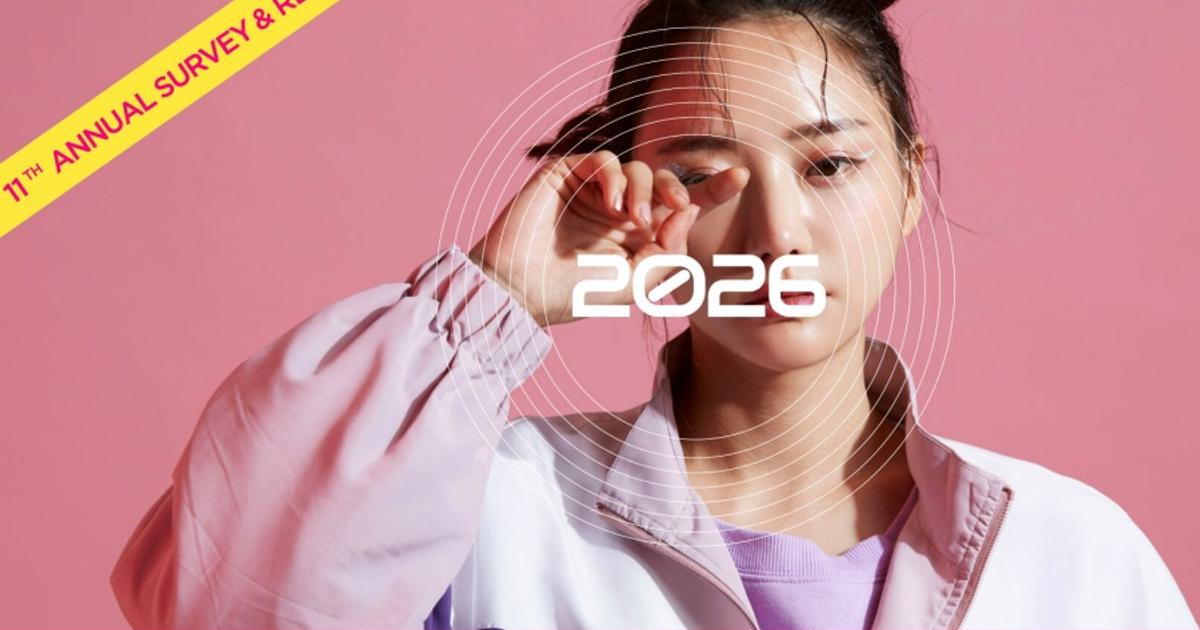
Brand and digital agency Totem has released its 11th annual report on marketing and media trends in China. Moving into 2026, the new report highlights a slight increase in optimism among 91 surveyed marketing leaders, particularly from brands operating in well-positioned categories.
Despite persistent negativity in overall market sentiment, advertising and media costs continue to rise, though at a much slower rate than in previous years. In comparison to the 2025 report, when 48% of brands planned budget cuts, now 33% anticipate budget decreases with 50% of brands planning cuts for ‘brand level media’ specifically in 2026. On the flipside, 39% of brands plan to increase overall marketing spend.

“Optimism remains muted, yet slightly improved from 2025, with a small cohort of well-positioned brands—those aligned with cultural tailwinds—seeing outsized opportunity,” says Totem founder Chris Baker. “Most others continue to face soft demand, persistent price pressure, and rising marketing costs. The result is a K-shaped market, where winners accelerate, and weaker players fall further behind. In this context, involution continues to grind margins lower, forcing brands to rethink pricing, positioning and product strategies at a fundamental level. ”
The newly-published report highlights three key trends in China marketing for 2026:
- Involution continues to loom large in China’s retail environment, driving prices and margins lower. The report forecasts a path ahead where fewer brands gain a larger share of the market, following what is referred to as “China’s new 20:80 rule.” To thrive in this environment, brands must establish robust pricing and positioning strategies, as well as crystal clear audience insights and alignment.
- Brands succeeding in China are activating constantly …creating fresh, compelling products and experiences for customers. Large scale ‘brand ceremonies’ also point to a crisis of confidence in retail , as brands struggle to balance evolving customer interests, together with high marketing costs and retail footprints. Therefore, brand activations should be thoroughly assessed as part of comprehensive brand playbooks.
- Consumer preferences are changing quickly, with experiences (and feel good) consumption outperforming status products. Preppy, sports and athleisure fashions are edging out traditional luxury and pricey streetwear brands. Feel good products (food, toys, accessories) are more affordable (to satisfy the urge to buy) and provide a degree of comfort (joy) during an uncertain, volatile period.
Among the marketers who participated in the survey, almost half describe the overall outlook for next year as “somewhat negative” or “very negative”, the highest rates over the past few years. In contrast, the percentages of marketers who ticked “very optimistic” and “somewhat optimistic” are also higher than the previous year. Meanwhile, more marketers are expected to increase their overall marketing spend in 2026, with fewer planning to decrease it compared to last year’s data.

Totem predicts that China’s ad spending and media costs will inflate by 4.0% year-over-year. In comparison, OMG puts it at 7.6%, WPP projects 4.0%, Dentsu expects 6.1%, with Havas Media and MediaBrands’ estimates at 4.0%. Ebiquity has projected almost 0% growth or inflation for 2026.

The primary marketing priorities for 2026, according to Totem, are brand awareness, sales (conversion), and improving customer experience. For the first time in many years, brand awareness has re‑emerged as a top priority for marketers in China, outpacing sales (conversion). According to the 2025 report, brand awareness had already overtaken customer loyalty (repeat purchases) as the second priority. However, in 2026, customer loyalty has fallen much further down to fifth place on the list of priorities.

The new report also reveals that in the coming year, digital spending is slowing down while social spending is also slowing. In 2025, agencies and vendors faced the sharpest budget cuts. While overall, in 2026, planned budget cuts are down, as some areas primed for pullback, including brand-level media investments, performance ads and internal staff/resources.

In terms of platforms in China, in recent years, RedNote (Xiaohongshu) has emerged as the leading platform in China for brands looking to drive new spending. Douyin ranks second, positioning itself as a key target for brand investments through 2026. WeChat, Tmall, Tmall Live, and Weibo are mature channels that show a strong willingness for investment from brands, according to this year’s survey results. JD and Kuaishou have also demonstrated positive growth in 2025 and are expected to gain increased attention in 2026. BiliBili and Zhihu are considered niche channels , which are highly effective for brands within specific sectors, with BiliBili for gaming and media, and Zhihu for professional services.

For influencers (KOLs), in year’s past, planned increases outpaced cuts by a factor of 2-3x. However, for 2026, only Xiaohongshu and Tmall Live are projected to have increases that surpass their respective cuts. According to the survey results, KOL activities for 2026 seem to be focusing on Xiaohongshu and Tmall Live, at the expense of other channels.

This year’s Totem China Marketing and Media Trends also presents 26 considerations in the coming year, among which China’s New 20:80 Rule is the newest prediction from the latest survey. According to the report, a small number of brands (20%) are expected to capture the majority (80%) of a consumer’s attention and consideration.
The report analysed that “in China’s old retail paradigm, consumers were incredibly promiscuous, wanting to sample an incredible range of brands as-and-when they became available or whenever they came into the trend spotlight. In this environment, China was able to support an incredible number of competitors in each category – more category players than any other market globally, by a long measure”.
However, as “exuberance of the pre-Covid era has been replaced by a sense of endurance”, Totem’s report forecasts that “consumers become more conscious and selective, a growing volume of brands falling out of the market. The bottom 75% of brands in each category/cohort are at risk of falling-out as a result of a narrowing market, together with trade-downs & outs. Persistent price competition adds margin pressures to an already tight market.”
link