Aakash Ohri, the chief business officer at DLF, on what super luxury real estate truly entails
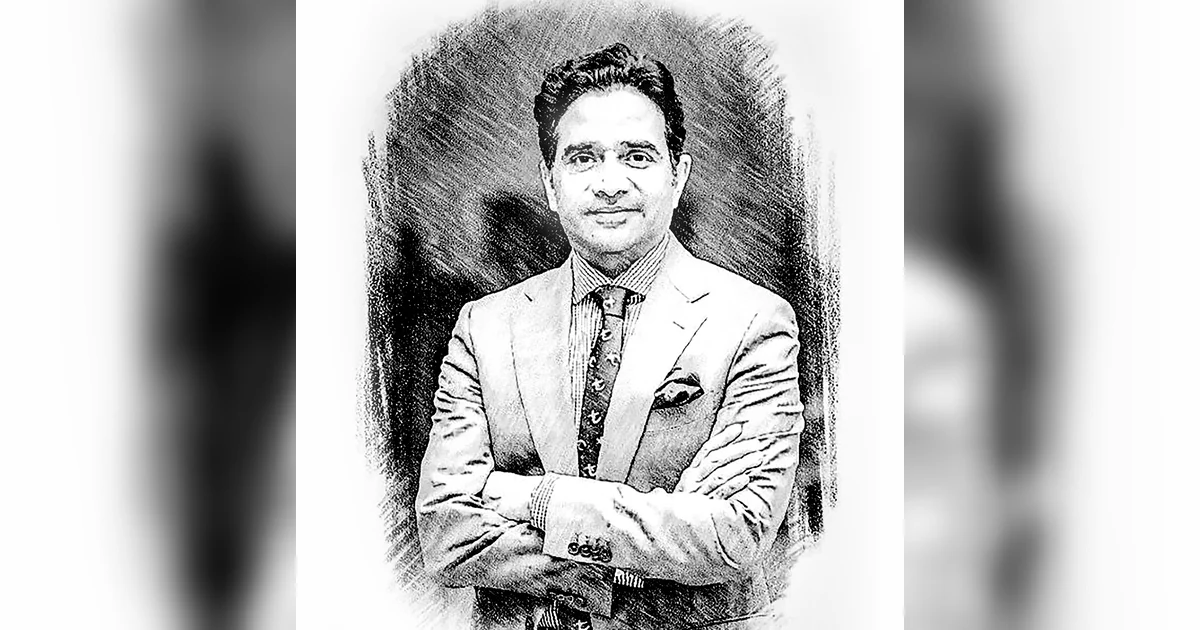

At a time when work:life balance is an ideal to aspire to, one wonders if the C-suite ever disconnects. Turns out, it is a luxury even our leaders cannot always afford. That becomes increasingly evident as we engage in a conversation with Aakash Ohri, the chief business officer at DLF, at The Ritz Carlton, DIFC. Even though we are meeting over brunch, Ohri’s appetite for work takes precedence over anything edible. He lives, and relives, every milestone that has catapulted DLF into India’s top league of real estate developers.
Mapping the journey of DLF is like mapping the journey of modern India itself. Established by Chaudhary Raghavendra Singh in 1946, the New Delhi-based real estate conglomerate has been instrumental in redefining the landscape of the Indian capital, and has in recent years pretty much defined what luxury living truly entails. In the 26 years that he has been part of DLF (he started with the golf business), Ohri himself has been a witness to, and a driver of, this change.
In January, the company snagged record bookings in its $4 billion “super luxury” home project, The Dahlias, in Gurgaon, as India’s rich and famous clamoured to be the first to buy.
Ask Ohri about the inspiration behind this bold business plan, and the dreamer in him comes to the fore. “When the chairman thought of this way back in 2007, it was a big, big struggle to get good hospitality professionals to move from hotels to real estate in 2008,” he recalls. Instead of outsourcing its hospitality services to companies, like the Four Seasons or Ritz Carlton, DLF developed this expertise in-house within its hospitality vertical over a period of two decades, by onboarding some of the finest hospitality professionals from world’s leading hotels and airlines, including India’s Oberoi.
Luxury real estate also lends itself to a larger-than-life vision, which translates into exclusive experiences that contribute to a fabulous lifestyle. The devil is in the details. From getting the right staff to having the right facilities, the canvas only gets broader. Ohri cites the example of the pastry shop at The Camellias, DLF’s famed super luxury residences in Gurgaon and a predecessor to The Dahlias, where they flew down a choux pastry chef from Paris, who’d been trained by the best in the business, for a bakery that’s aptly called Choux. “It was not easy for us to get people from hospitality brands for a residential business. So, we had to work really hard initially to get them. This is how you create experience.”
In that sense, The Dahlias and The Camellias have pretty much set the narrative on luxury living. But then India exists in contrasts, and more often than not, the West is too happy to paint the country in one hue. Ohri, who is yet to indulge, is most passionate when he is debunking these simplistic perceptions. “I have been all over the world, and heard what people said about India,” he says. “So, you have to come and see what we have done. It is a matter of pride for every Indian to have a place in which not many people can be. Every country has that one real estate icon: for Dubai, it’s the Burj Khalifa; the US has its Beverly Hills, Manhattan has Central Park area, and London has Hyde Park. Today, The Camellias is that beacon of real estate for India, and the global real estate industry is enamoured with it.”
Sample this: the residents across the project, which will total 429 luxury homes in nine towers, have access to facilities such as a health club, spa, infinity pool, clubhouse, bowling alley, a chef on call and laundry facilities, meeting rooms and a business centre, among many other services, available at its 160,000 square feet clubhouse. “With a starting price of INR 1,40,000 per square feet (Dh6,000), The Camellias features 14 duplex penthouses, each ranging from 13,000 to 16,000 square feet,” he says.
While Ohri admits that luxury is bespoke and means different things to different people, there is unanimity on The Camellias community being the “billionaires’ club of India”, inhabited by the crème de la crème of the Indian society. As a result, it has also become what Ohri says is the “biggest networking residential hub of the world”.
The rush to buy in the 17-acre development was also the first time that the sales value achieved in a single project has crossed INR 100 billion ($1.16 billion) in one quarter, according to data from analytics firm CRE Matrix. With an average price of $8 million per unit, the sky is now the limit for India’s super rich.
Ohri notes that the trend of affluent Indians buying luxury houses picked up pace after the pandemic, as home buyers, unfazed by high borrowing costs, kept lapping up bigger, more amenities-laden houses. “The pandemic taught us one thing: life is finite, so live it up,” Ohri says. “If you have it and can afford it, go for it. A lot of people who had money didn’t have the courage to spend it but here’s what happened for real estate — after the first wave, we were boxed in. Wherever we were boxed in, we realised we needed bigger homes, that extra room, a bigger balcony, everyone was on everyone’s toes. Even those who had larger homes, invested in more homes.”
 The rush to buy in the 17-acre development was also the first time that the sales value achieved in a single project crossed INR 100 billion ($1.16 billion) in one quarter. With an average price of $8 million per unit, the sky is now the limit for India’s super rich”
As was seen in other economies, holidays and car upgrades became less of a priority after Covid, with real estate becoming the number one on the list, the effects of which are sustaining today. “People used to invest in hill and beach properties just for the sake of it, but post-Covid, people said if we have to move to Goa, our lifestyle won’t change. We need to be at par with what we have right here in Delhi,” adds Ohri.
The profile of the buyer, he says, has also changed. Today, 28-35-year-olds are looking at buying homes where it was once 35-plus. “They’re aspirational and work hard to get the best, and will not compromise,” he says, adding that 20 per cent of the owners of the newest development are unicorns, “and think about the potential of that 20 per cent”.
As a result of these monumental leaps, DLF has also become one of the largest employers of hospitality professionals in the country. “By choice, these hoteliers leave and today, they have an alternate career. They can go back to hospitality and do even better. There have been general managers who have gone back to their alma maters and had promotions,” he says.
And it is these teams, Ohri says, that must take the credit for the success of the brand’s courageous steps — everyone from the housekeeping staff to the gardener and the 24-hour maintenance teams. “Luxury is a process,” he says. “Whether it’s a watchmaker, a leather worker, it’s about the work done every day.”
link